

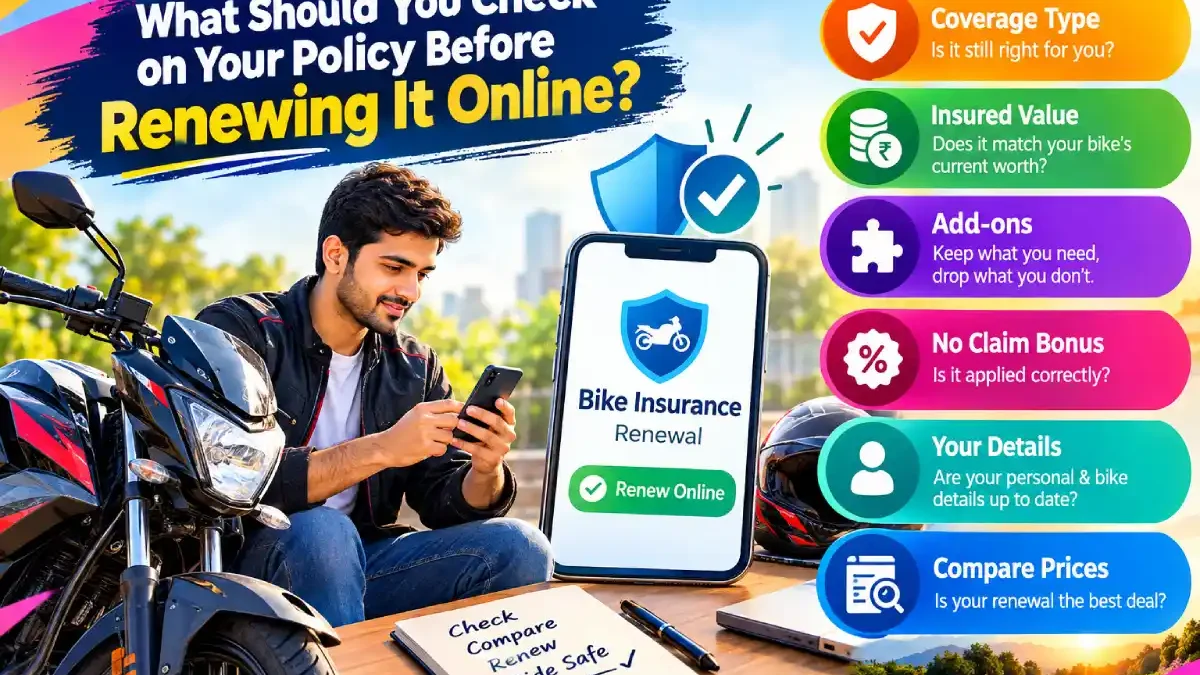
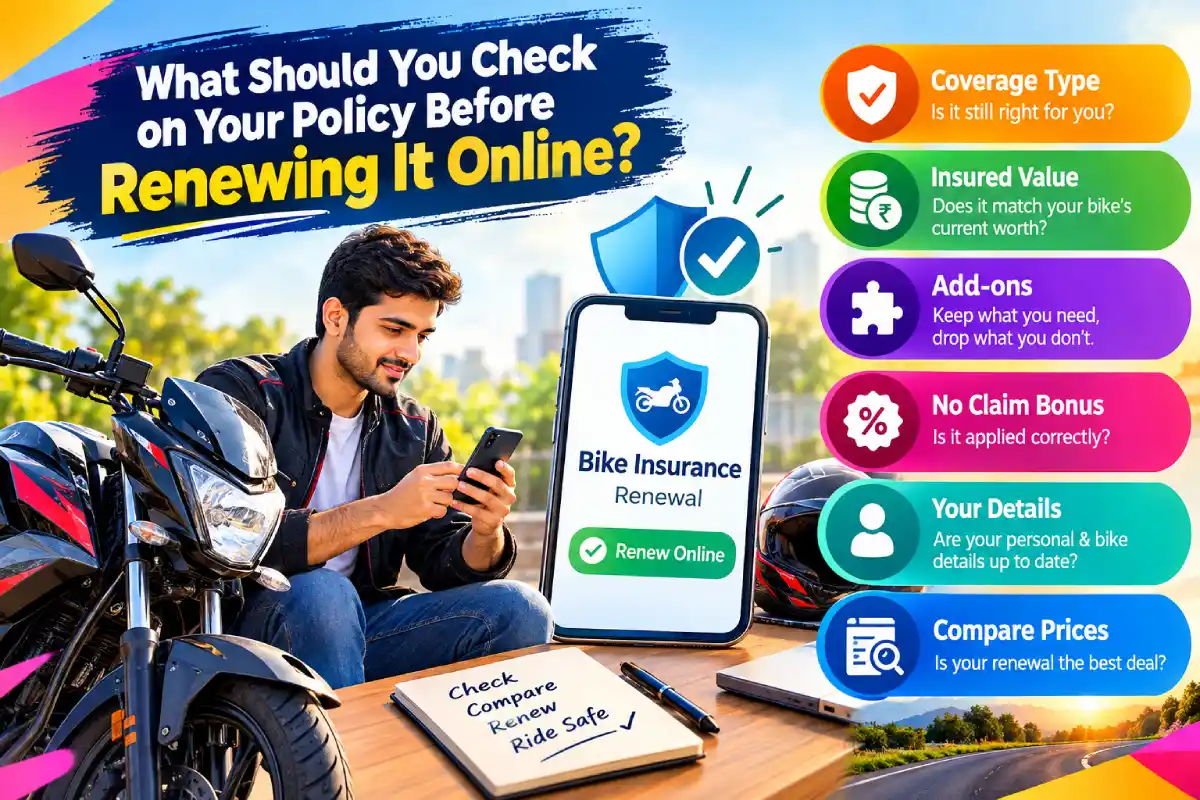
Online renewal is designed to be effortless. A reminder arrives, you log in, the previous year’s details are already filled in, and a single tap carries you to payment. That smooth process is convenient, but it also invites a habit of renewing on autopilot, accepting last year’s policy without a second look. The trouble is that your needs, the bike, and the policy’s terms can all shift over a year. A few minutes of checking before you pay can save you from carrying coverage that no longer fits or paying for something you did not intend.
Table of Contents
Is your coverage type still right for you?
Start with the most fundamental question: what kind of policy are you actually renewing? Bike insurance broadly comes in two forms, a basic third-party cover and a more complete comprehensive cover, and the right one depends on your situation.
If your bike is newer or valuable, comprehensive cover protects it against theft, damage, and accidents, not just your liability to others. If it is older and worth little, you might reasonably stick with the basic option. The mistake is renewing whichever type you had last year without asking whether it still suits you. Your bike ages, its value changes, and your priorities shift. Renewing bike insurance online is the natural moment to confirm the coverage type still matches what you need to protect.
Is the insured value of your bike accurate?
This is a number many people never check, yet it matters a great deal. The insured declared value is roughly what your bike is worth for insurance purposes, and it shapes both your premium and what you would receive in a total loss or theft.
A bike depreciates each year, so the value carried over from last year may be too high, meaning you are paying a premium on an inflated figure. Set it too low, though, and a claim pays out less than the bike is really worth. At renewal, check that the declared value reflects the bike’s current worth, adjusting it if the auto-filled figure looks off. A two wheeler insurance renewal done thoughtfully includes making sure this figure is realistic rather than simply inherited from the previous term.
What add-ons are you paying for, and do you still need them?
Add-ons quietly accumulate. Over the years you may have attached extras like zero depreciation cover, roadside assistance, engine protection, or accessories cover, and some of these renew automatically along with the base policy.
Before you pay, look at what is bundled in. An add-on that made sense when your bike was new may be less useful now, and dropping one you no longer need can lower your premium. You might also realize you want a protection you do not currently have. The point is to decide deliberately rather than let the list carry over unexamined. Renewing bike insurance online gives you a clear view of these extras, so use it to keep only the ones that earn their cost.
Is your No Claim Bonus being applied correctly?
Your No Claim Bonus is a discount earned for every claim-free year, and it can grow into a meaningful saving. Because it is applied automatically, most people never verify it, but errors do happen.
Check that the NCB shown on your renewal reflects your actual claim-free record. If you did not make a claim in the past year, your bonus should have increased, and a renewal that ignores it means you are overpaying. If you are switching insurers, make sure the bonus you earned is carried across rather than lost. This single discount can shave a noticeable amount off your premium, so confirming it is correctly applied is one of the more rewarding checks you can make before completing a two wheeler insurance renewal.
Are your personal and bike details still up to date?
A policy is only reliable if the details in it are accurate. Over a year, things change: you might have moved, changed your phone number, re-registered the bike, or made modifications. Any of these can leave the policy describing a slightly different reality than the one you live in.
Confirm your contact details so you actually receive important communications, and check that the bike’s details, meaning the registration number, make, and model, match the current vehicle. If you have modified the bike or changed its registration, this is the moment to update it. A mismatch between the policy and the real bike can complicate a claim, so a quick review protects the coverage you are paying for.
Have you compared the renewal price with other options?
Convenience makes it tempting to renew with the same insurer without a second thought, but the renewal quote is not always the best deal available. Insurers adjust their pricing, and a year is long enough for a better option to appear elsewhere.
Before you pay, it is worth a quick comparison. Check what other insurers would charge for similar coverage, and see whether your current insurer’s renewal price is still competitive. Renewing bike insurance online makes this easy, since you can gather quotes in minutes. You may find your existing policy is still the best value, in which case you renew with confidence. Or you may find a stronger offer, and either way you have made an informed choice rather than an automatic one.
So how should you approach an online renewal?
Slow down just enough to review before you pay. The whole point of the checks above is to make sure the policy you renew is the one you actually need, not a carried-over version that may no longer fit. It takes only a few minutes and can save both money and trouble.
Run through the essentials: the coverage type, the insured value, the add-ons, the No Claim Bonus, your personal and bike details, and the price against alternatives. Update whatever has changed, drop what you do not need, and confirm the discounts are applied. Then complete the payment knowing exactly what you are buying. A two wheeler insurance renewal handled this way is not a rushed formality but a deliberate decision, and that small effort keeps your coverage accurate, fairly priced, and genuinely useful for the year ahead.
